

You’ve aced your semester exams, your resume is polished, and you’re suited up for the big day—campus placements. You walk into the assessment hall, and the first challenge isn’t a written test or a one-on-one interview; it’s a Group Discussion (GD). For many students, this is the most daunting part of the process. Why? Because in just 15-20 minutes, you must showcase not just your knowledge, but your ability to think on your feet, communicate, collaborate, and lead—all while competing with your peers.
In the Indian campus placement landscape, especially for coveted roles at top companies (with packages often ranging from INR 8-25 LPA for freshers), the GD is a non-negotiable screening round. It’s where recruiters from firms like HUL, TATA, Infosys, and leading BFSI companies separate the potential leaders from the crowd. They aren’t just looking for the loudest voice; they’re searching for structured thinking, emotional intelligence, and team spirit.
This article is your definitive playbook. We’ll move beyond generic advice and delve into the nuanced strategies that make candidates stand out. Whether you’re an engineering student, an MBA aspirant, or a graduate from any stream, these GD tips are tailored for the unique dynamics of campus placement scenarios in India. By the end, you’ll have a clear framework to not just participate, but to excel.
Why Group Discussions Matter in Placements
Before we dive into the “how,” let’s understand the “why.” A GD is a simulated professional environment. It assesses competencies that a written test cannot:
- Communication Skills: Can you articulate your thoughts clearly and concisely?
- Logical Reasoning & Knowledge: Do you have substance behind your points?
- Teamwork & Interpersonal Skills: Can you disagree respectfully and build on others’ ideas?
- Leadership & Initiative: Can you steer the discussion constructively?
- Confidence & Poise: How do you handle pressure and diverse opinions?
- Listening Ability: A critical yet often overlooked skill—are you actually listening or just waiting to talk?
Recruiters use this 15-minute window to predict your future behavior in meetings, projects, and client interactions. It’s a high-stakes game, but with the right preparation, you can consistently win.
1. Mastering the GD Basics: Foundation First
You cannot run before you walk. Let’s solidify the fundamental principles that underpin every successful GD performance.
Understanding the Structure and Flow
A typical campus placement GD follows a set pattern:
- Topic Announcement (1-2 mins): The moderator (usually an HR representative or panelist) announces the topic. It could be abstract, factual, controversial, or case-based.
- Preparation Time (2-3 mins): You are given time to jot down your thoughts. This is golden. Use it wisely to structure your opening, key arguments, and examples.
- Discussion Time (12-15 mins): The actual discussion takes place. The group is expected to self-manage, initiate, and conclude.
- Conclusion (1-2 mins): Ideally, the group should summarize the key points discussed. A volunteer often gives this summary.
- Feedback/Q&A (Optional): Panelists may ask specific candidates questions about their points or the discussion.
The Three Golden Rules of Content
What you say is as important as how you say it. Your content must have a strong backbone.
- Clarity of Thought: Organize your points logically. A simple structure is: Introduction/Stance -> 2-3 Key Arguments with Examples -> Conclusion. Avoid rambling.
- Quality over Quantity: It’s a common misconception that you must speak the most. One well-researched, insightful point is far more valuable than five generic statements. For instance, in a topic like “Digital India: Boon or Bane,” instead of just listing benefits, you could cite a specific example like the impact of UPI on street vendors, supported by a general awareness of its transaction volume growth.
- Factual Accuracy & Examples: Ground your arguments in facts, data, or real-world examples. If you quote a statistic, be reasonably sure. It’s better to say “a significant portion of the population” than to misquote a specific percentage. Use examples from Indian current affairs, business history, or socio-economic studies relevant to the topic.
2. How to Lead a GD Without Being Dominating
Leadership in a GD isn’t about title; it’s about influence and facilitation. You don’t need to be the first speaker to be the leader.
Initiating and Concluding: High-Impact Moves
Initiating: If you have a clear and compelling opening, go for it. A good initiation defines the topic, sets a broad framework, and invites discussion. For example, “The topic ‘Ethics in Business is an Oxymoron’ compels us to examine the fundamental tension between profit motives and moral frameworks. Perhaps we can explore this by looking at it from the perspectives of corporate governance, consumer trust, and long-term sustainability. I’d like to begin by suggesting that in the era of social media, ethical lapses have a higher cost than ever before.” This shows structure and invites collaboration.
Concluding: Summarizing is a powerful way to leave a last impression. A good conclusion doesn’t introduce new points but succinctly captures the group’s consensus or key disagreements. “To summarize our 15-minute discussion, while we agreed that automation increases efficiency and reduces costs, a strong concern emerged regarding its impact on medium-skilled employment in the Indian manufacturing sector. The group largely felt that proactive reskilling initiatives by both government and industry are the need of the hour.”
The Art of Facilitation and Inclusion
True leaders make the group better. You can demonstrate this by:
- Building on Others’ Points: “I agree with Priya’s point about renewable energy costs falling, and to add to that, the PLI scheme in India is specifically aimed at making solar panel manufacturing more competitive locally.”
- Encouraging Quiet Participants: “Rohan, you looked like you had a point on the regulatory aspect. Would you like to share?” This shows empathy and team spirit.
- Steering Back from Digression: “That’s an interesting anecdote, but to keep us on track with the main topic of work-from-home productivity, perhaps we can focus on measurable metrics.”
Remember, the goal is a balanced, productive discussion, not a debate where you “win.”
3. The Silent Language: Mastering Body Language
Over 50% of communication is non-verbal. In a GD, your body speaks volumes before you utter a word.
Posture, Eye Contact, and Gestures
- Posture: Sit upright, lean slightly forward to show engagement. Avoid slouching or leaning back, which can appear disinterested or arrogant.
- Eye Contact: This is crucial. When speaking, make gentle eye contact with various panel members. When listening, look at the speaker to show respect. Avoid staring, but also don’t let your eyes dart nervously or look only at your notepad.
- Gestures: Use open hand gestures to emphasize points naturally. Avoid closed gestures like crossed arms (defensive) or pointing fingers (aggressive). Nodding while others speak shows you are actively listening.
Managing Nervous Habits and Projecting Confidence
Nervousness is normal, but managing it is key. Common pitfalls include fidgeting with a pen, shaking your leg, touching your face repeatedly, or playing with your hair. Be conscious of these. Keep your hands calmly on the table or in your lap. Your voice is part of your non-verbal toolkit—speak at a moderate pace, with clear pronunciation, and vary your tone to avoid sounding monotonous. A steady, calm voice projects confidence even if you feel nervous inside.
4. Preparing for Different Topic Categories
GD topics in MBA GD and campus placements generally fall into distinct categories. A smart preparation strategy involves practicing for each type.
Common Categories and Strategies
- Abstract Topics: (e.g., “The Red Box,” “Zero is a number,” “The Wheel is Turning”) These test lateral thinking and creativity. There is no right answer. Focus on interpreting the metaphor, building a logical narrative, and connecting it to a broader theme like innovation, life cycles, or potential. Use examples to ground your abstraction.
- Factual/Current Affairs Topics: (e.g., “Impact of AI on the Job Market,” “India’s Climate Change Commitments,” “The Future of Retail Banking”) These test your knowledge and analytical ability. Stay updated with major national news (The Hindu, Indian Express editorials, business news). Structure your points with cause-effect analysis, pros and cons, and future implications.
- Controversial/Debate Topics: (e.g., “Capital Punishment should be abolished,” “Social media does more harm than good”) These test your ability to handle conflict and argue logically. Take a clear stand. Present balanced arguments by acknowledging the counter-view before refuting it. Use data and ethical reasoning. Avoid getting emotional or personal.
- Case-Based Topics: Common in MBA GDs. You’re given a business scenario (e.g., a company facing an ethical dilemma, a marketing problem). This tests problem-solving and application of business concepts. Use frameworks like SWOT, PESTLE, or a simple Problem-Cause-Solution approach. Focus on practical, actionable recommendations.
Building a Knowledge Repository
You can’t predict the exact topic, but you can build a mental library of examples and data points across domains: Indian economy (GDP, inflation, sectors), technology (AI, EVs, 5G), social issues (education, healthcare, gender equality), and business (start-up ecosystem, corporate governance). Regularly reading a quality newspaper and a business magazine is non-negotiable for serious aspirants. For more structured preparation on handling specific question types, explore our resources on common interview questions.
5. The Ultimate Checklist: Do’s and Don’ts
Let’s crystallize everything into a quick-reference checklist.
Essential Do’s
- Do listen actively. It’s the foundation of a good response.
- Do speak clearly and audibly. Ensure everyone can hear you.
- Do use simple, correct English/Hindi. Focus on clarity over complex vocabulary.
- Do respect others’ speaking time. Keep your points concise (30-45 seconds ideally).
- Do back your points with reasoning. Always explain “why.”
- Do maintain a positive, collaborative tone. Smile when appropriate.
- Do be prepared to either initiate or summarize. Have a mental template ready.
Critical Don’ts
- Don’t interrupt. Let the speaker finish, even if you disagree vehemently.
- Don’t be aggressive or sarcastic. Disagree with the idea, not the person. Use phrases like “I have a slightly different perspective…”
- Don’t repeat points. If your point has been made, acknowledge it and add a new dimension.
- Don’t go off-topic. Stay focused on the core subject.
- Don’t use slang or informal language. Maintain a semi-formal decorum.
- Don’t try to be the only speaker. Quality matters, not airtime.
- Don’t panic if you make a minor error. Correct yourself gracefully and move on.
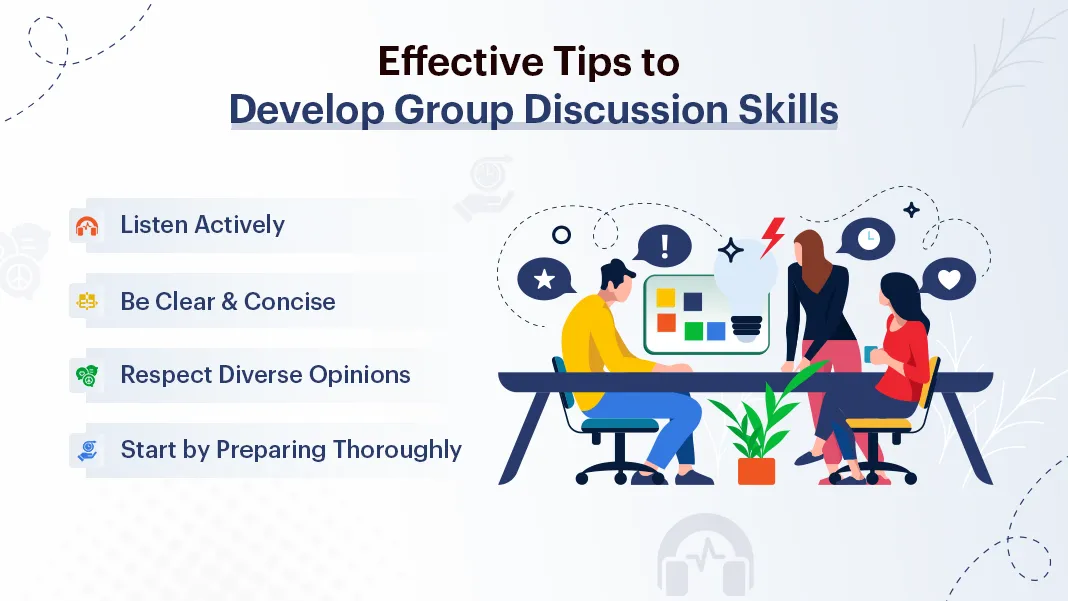
Key Takeaways and Final Preparation Strategy
Excelling in a Group Discussion is a skill that can be systematically developed. Remember these core principles:
- Substance with Style: Great content delivered with confident, positive body language is the winning combination.
- Be a Team Player: The GD is a test of how you function in a group. Facilitate, include, and build consensus.
- Prepare Across Categories: Don’t just read headlines. Dive deeper into issues, form opinions, and collect examples.
- Practice, Practice, Practice: This is the most important step. Theoretical knowledge alone won’t help.
Conclusion: From Preparation to Performance
Campus placement season is competitive, but your preparation doesn’t have to be a solitary struggle. The group discussion round is your opportunity to showcase the holistic, dynamic professional you are poised to become. By internalizing the strategies outlined here—from the foundational basics to the nuanced art of leadership and body language—you transform the GD from a source of anxiety into a platform of opportunity.
Remember, every student in that room is smart. What will make you stand out is your structured communication, your emotional intelligence, and your ability to create value within the group dynamic. Start your preparation today. Form study groups, choose diverse topics, and simulate real GDs with feedback.
To truly master the art of the GD and other placement rounds, consider leveraging technology for personalized, realistic practice. JobUAI is designed to help you do exactly that.
Ready to practice with AI-powered simulations that mimic real campus placement GDs and interviews? Sign up for JobUAI today. Our platform provides instant feedback on your communication, content, and body language cues, helping you identify blind spots and improve rapidly. For more tips and in-depth guides on navigating your career journey, visit our blog.
Your dream job is waiting. Go ace that discussion.
FAQ’s
Group discussions help recruiters assess communication skills, leadership qualities, logical thinking, teamwork, and confidence—qualities that written tests cannot evaluate effectively.
Common GD topics include current affairs (AI, economy, climate change), abstract topics, controversial debates, and case-based business scenarios—especially in MBA and engineering placements.
You can lead by initiating with structure, building on others’ points, encouraging quieter participants, summarizing key ideas, and maintaining a collaborative tone instead of arguing aggressively.